
The Big Idea
Part 1: The Problem
Investing Is Just Long-Term Saving
At its core, investing is simple. You're saving money for later. But instead of keeping it in cash, you put it into something that has a chance to grow.
The goal? End up with more purchasing power in the future than you started with today.
The Cash Trap
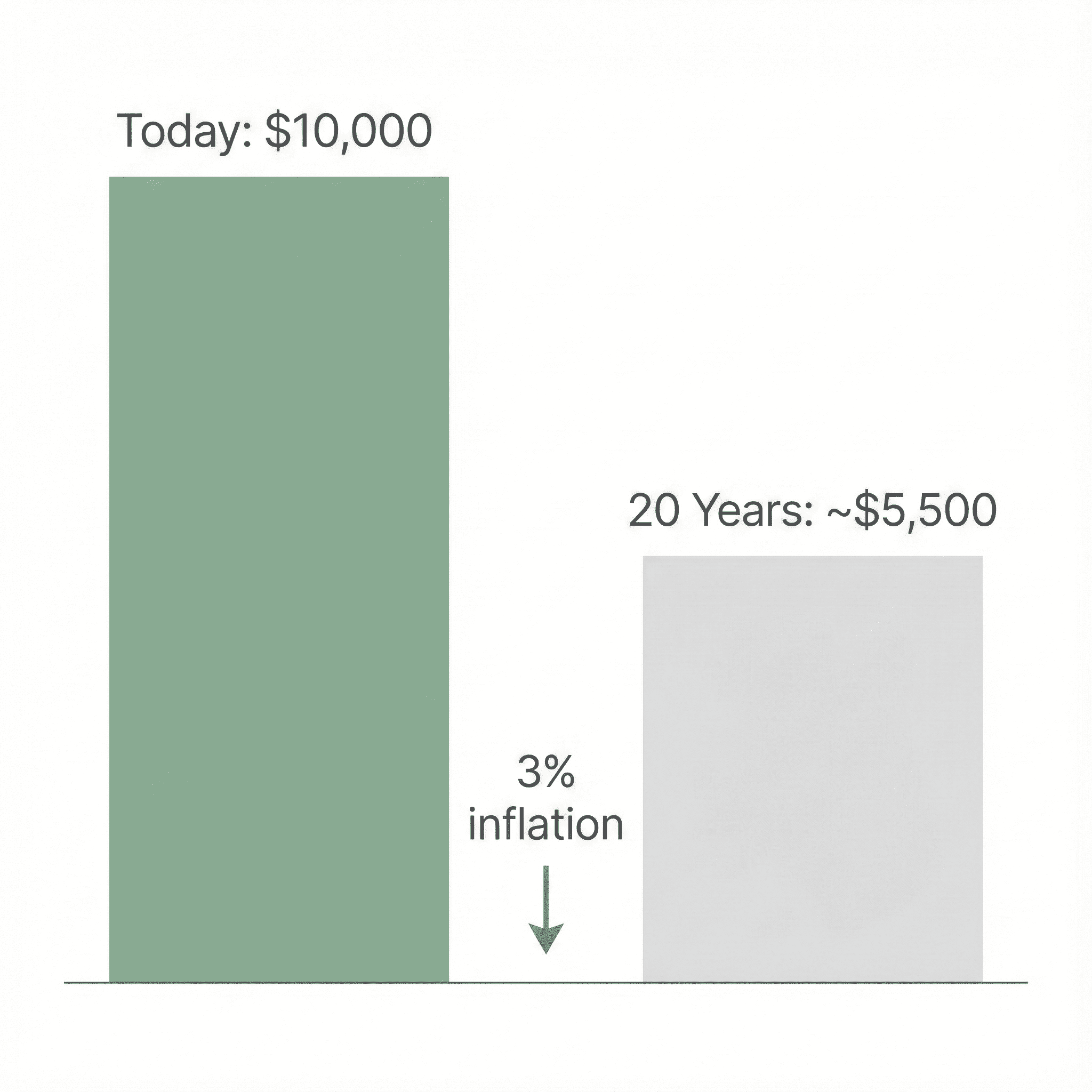
You know you should be saving. Most people do. The problem is, if you just keep cash in a savings account, inflation quietly eats it away.
At 3% inflation, $10,000 today has the purchasing power of about $5,500 in 20 years.
You're losing money by doing nothing.
But for Muslims, the Path Is Full of Traps
So you need to put your money into something that grows. But what?
For Muslims, the obvious options don't work. Or they come with serious problems.
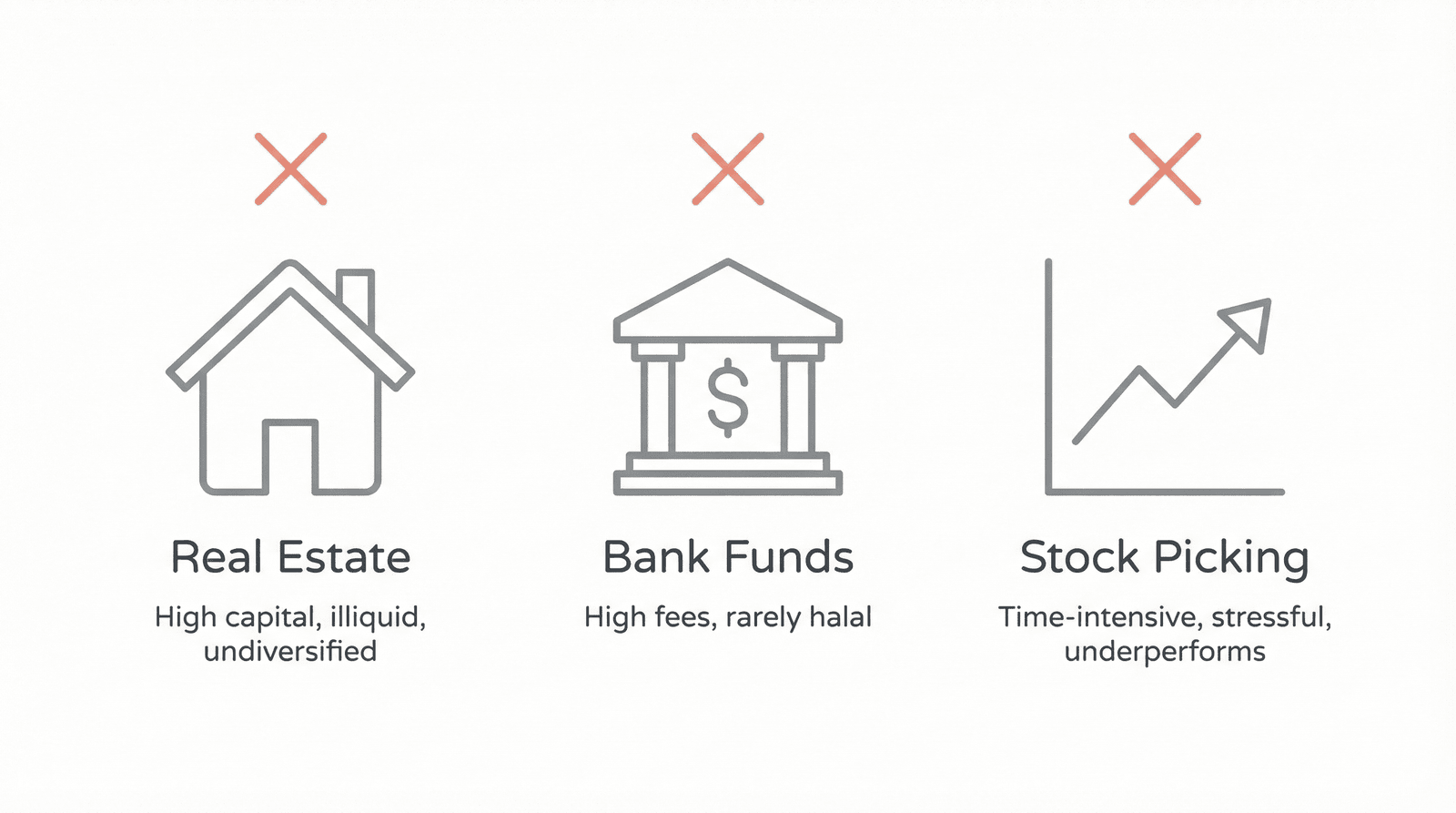
Trap 1: Real Estate
Real estate requires a lot of capital upfront. It's hard to sell quickly when you need the money. And you're betting everything on a single property in a single market.
For most people, it's not accessible. Even when it is, it's not diversified.
Trap 2: Bank Mutual Funds
The funds your bank sells you often charge high fees. Sometimes 2% or more per year. Over decades, that fee drag destroys your returns.
And most bank mutual funds are not halal. They hold interest-bearing bonds, invest in haram industries, or don't have any Shariah screening at all.
Trap 3: Picking Stocks Yourself
You can pick individual stocks. Some people do it successfully. But it takes serious time, research, and ongoing maintenance.
For most people, it's stressful. And statistically, individual stock-pickers underperform the market over time anyway.
⚠️ There Is No Perfect Portfolio
Before we talk solutions, let's be clear.
No combination of assets will maximize your returns while eliminating your risk. That portfolio does not exist. Anyone promising otherwise is selling something.
What does exist is a range of reasonable portfolios. Each with different tradeoffs between expected growth and expected bumpiness.
Your job isn't to find the "perfect" portfolio. It's to find one you can stick with.
Part 2: The Solution
What You Actually Need
You need something:
- Passive: you can set it up, contribute regularly, and not stress
- Diversified: not betting everything on one stock or one property
- Halal: screened for Shariah compliance
- Low cost: so fees don't eat your returns
- Accessible: you can start with any amount
That's where ETFs come in.
What's an ETF?
If you're new to investing, this term might be unfamiliar. Let's break it down.
ETF stands for Exchange-Traded Fund.
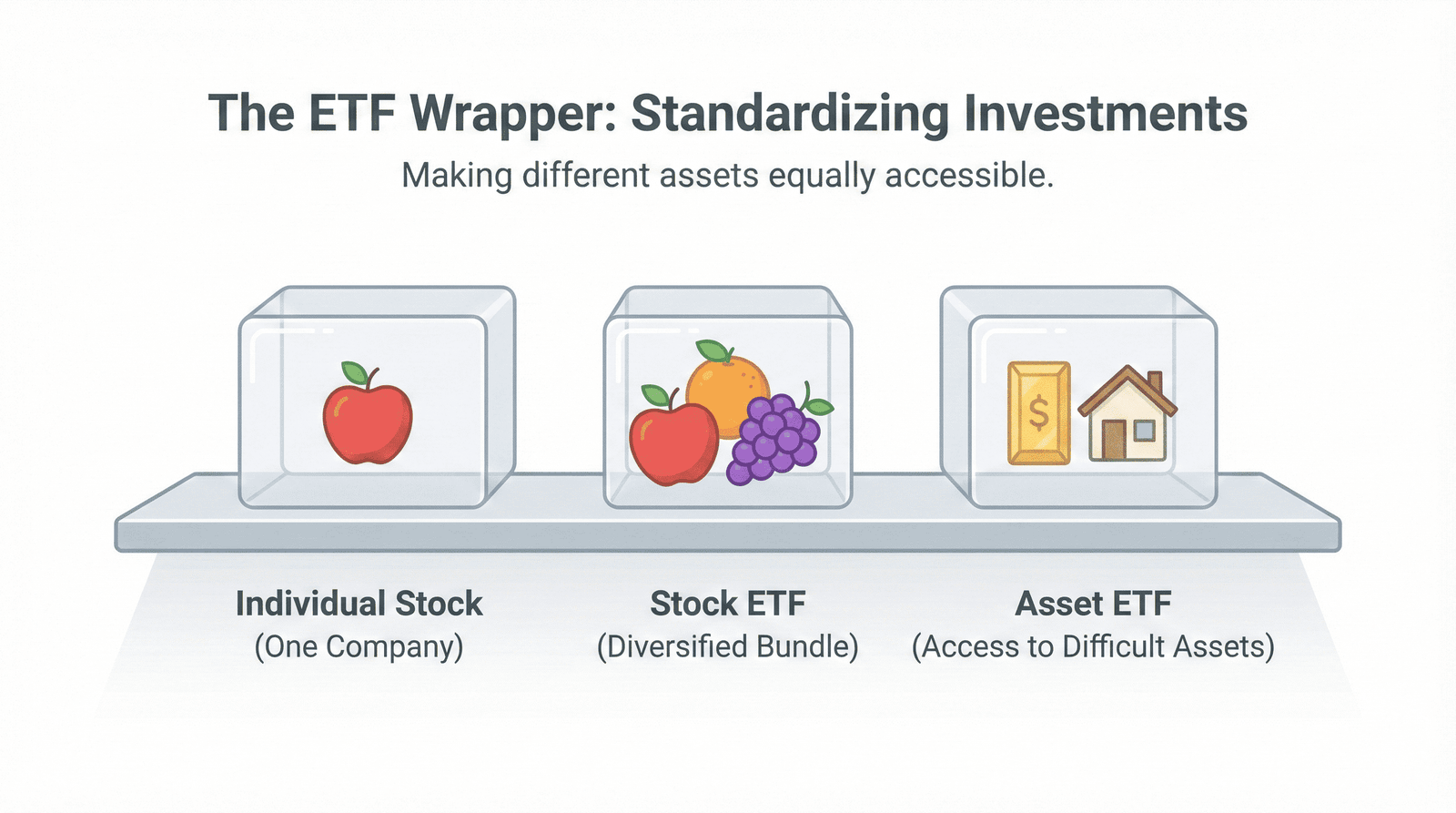
Originally, ETFs were just bundles of stocks. Instead of buying one company and hoping it goes up, you could buy a single fund that holds dozens (or hundreds) of stocks inside it — instant diversification.
But over time, ETFs became something more: a way to access asset classes that regular investors couldn't easily buy on their own.
That could be:
- Hundreds of stocks (like Apple, Microsoft, Johnson & Johnson)
- Gold bullion (without storing bars in your basement)
- Real estate investment trusts (without buying property)
- Sukuk (Islamic bonds normally sold to institutions)
- Or a mix of all of these
ETFs trade on the stock exchange just like individual stocks. You can buy and sell them through any brokerage. But unlike a single stock, an ETF can give you instant diversification — and access to assets that used to be out of reach. All in one purchase.
What Makes an ETF "Halal"?
Not all ETFs are Shariah-compliant. A halal ETF has been screened to exclude:
- Companies that deal in alcohol, gambling, pork, weapons, or adult entertainment
- Companies with excessive debt (high leverage ratios)
- Companies that earn too much income from interest
Halal ETFs are audited by independent Shariah boards. Scholars review the holdings to ensure compliance.
The Good News: Halal ETFs Exist Now
Over the past decade, a small but meaningful set of Shariah-compliant ETFs has emerged. We're not talking hundreds. We're talking about roughly a dozen globally-recognized halal ETFs across different asset classes.
That's enough to build a real, diversified portfolio.
- Halal equity ETFs: tracking US, international, and emerging market stocks
- Gold ETFs: backed by physical bullion
- Sukuk ETFs: Shariah-compliant fixed income
- REIT ETFs: real estate exposure without buying property directly
- Crypto ETFs: tracking Bitcoin, Ethereum, or broader crypto indexes
The New Problem: Which One Do You Pick?
Here's where it gets tricky.
A dozen options is enough to build with. But it's also enough to create confusion.
- Which ETF fits your goal?
- How do you compare across different providers?
- What combination makes sense for your timeline and risk tolerance?
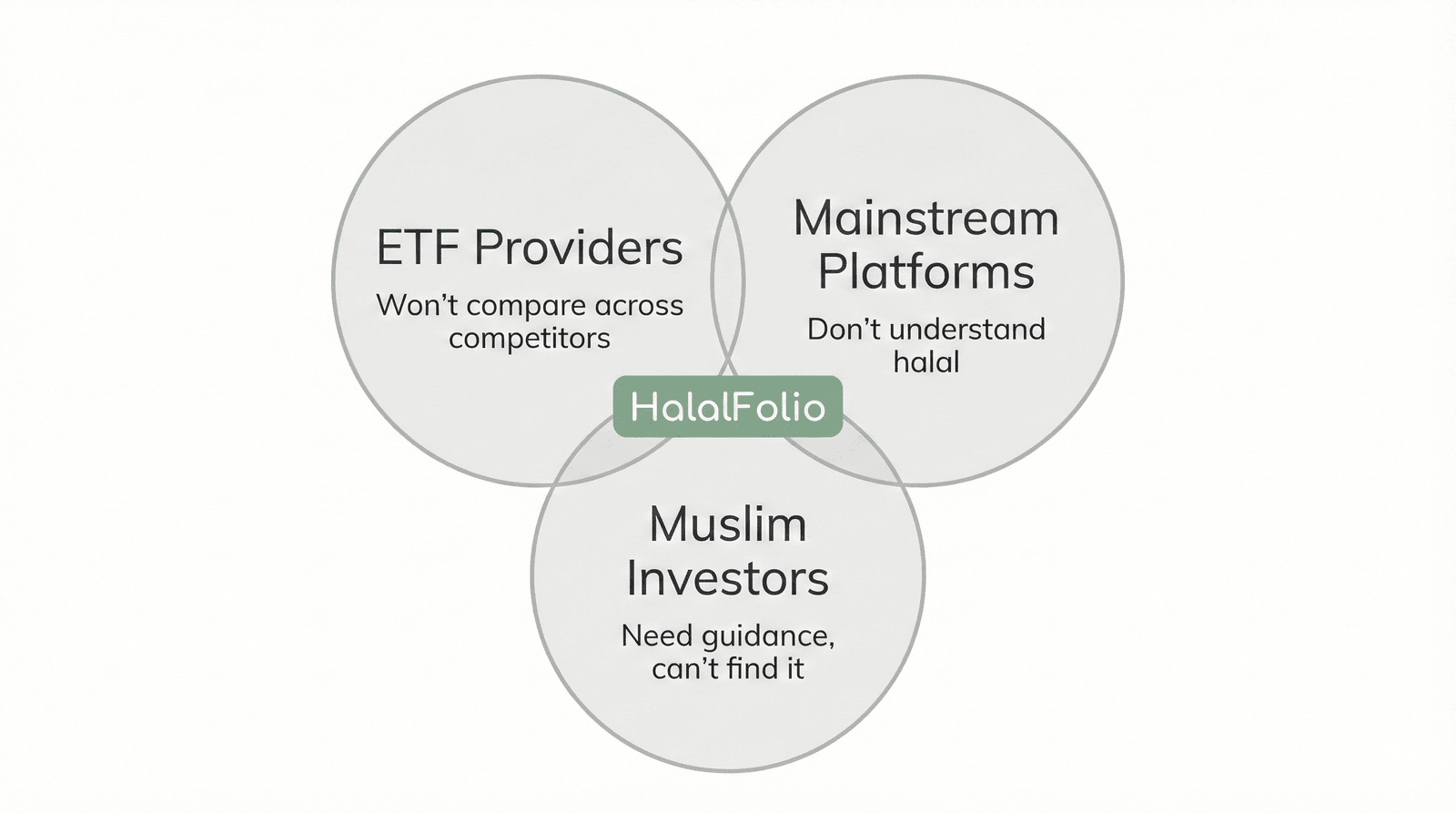
ETF providers won't help you here. They're not going to build a tool that compares their fund against a competitor's.
And most mainstream investing platforms don't know (or don't care) what makes a fund halal.
Part 3: The Approach
A Portfolio for Every Goal
Here's the core idea behind HalalFolio.
Every financial goal should have its own portfolio of halal ETFs designed to help you reach it.
Not one portfolio for everything. Not a generic "retirement fund." A specific mix of assets, suited to:
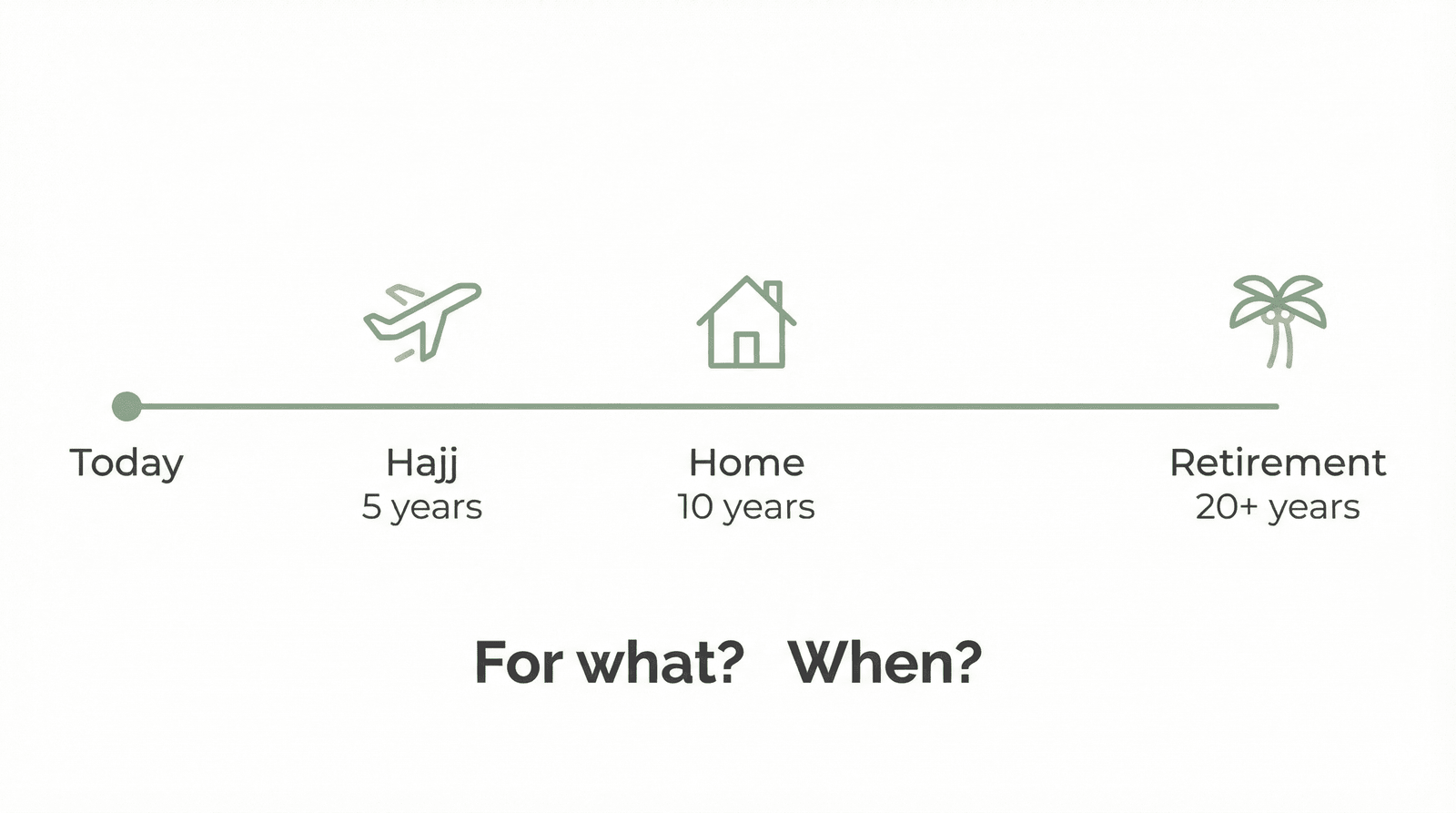
- What the money is for (Hajj, a home, education, retirement, general wealth)
- When you need it (5 years, 10 years, 25 years)
A Hajj fund you need in 5 years looks very different from a retirement fund 25 years away. The goal and timeline shape the strategy.
Timeline Over Identity
Your portfolio should be shaped by when you need the money. Not by how you think of yourself as an investor.
Labels like "conservative" or "aggressive" are less useful than asking: how long do I have?
- A Hajj fund needed in 4 years cannot afford a 30% crash. You need that money soon.
- A retirement fund 25 years away can ride it out. You have time to recover.
Time is the dominant variable. Everything else follows.
Start Now. Automate. Adjust Later.
Here's a truth about money. Inertia is your enemy.
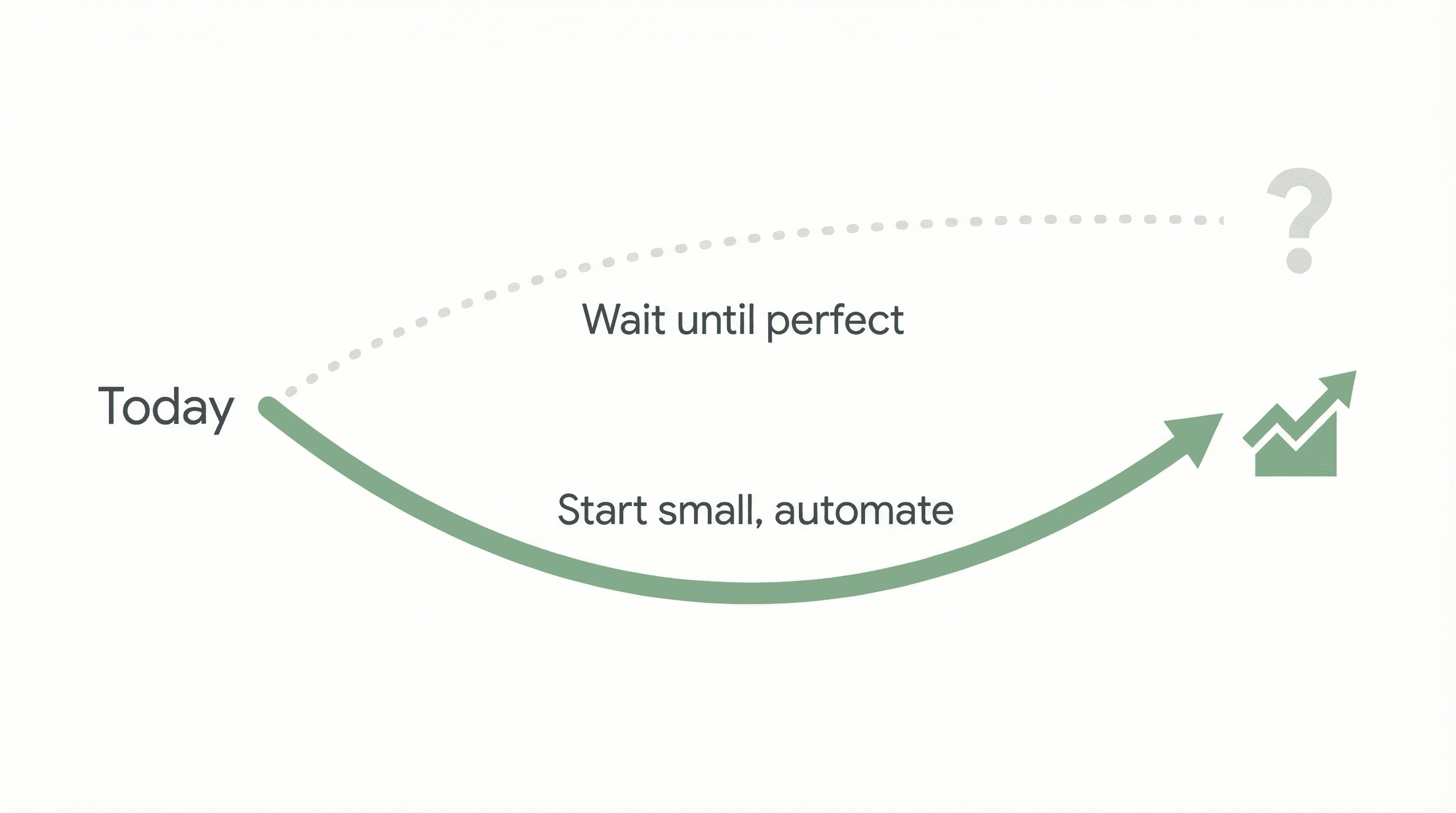
If you wait until everything is "perfect"... until you've paid off all debt, saved 6 months of expenses, and sorted your life out... there's a good chance you'll never start investing. That's how it works. Waiting breeds more waiting.
The better move? Start small. Automate it. Then turn up the dial when you can.
If you can say: "I have $10/month I could put toward something 5+ years from now"... that's enough. You don't need a perfect financial setup. You need momentum.
HalalFolio is built for this. Whether you're beginning with $100 or $10,000, the tools work the same:
- Build your first portfolio
- Understand the math behind it
- Set up automatic contributions at your brokerage
- Let compound growth do its thing
You can always refine later. But you can't refine what doesn't exist.
Part 4: What HalalFolio Is (And Isn't)
What HalalFolio Is
HalalFolio is an educational platform for self-directed Muslim investors.
We help you:
- Explore the landscape of globally-available halal ETFs across multiple providers
- Understand how portfolios work: return, risk, volatility, correlation
- Build model portfolios matched to your personal goal and timeline
- Visualize projected outcomes using real math (not guesses)
- Execute on your own terms, at your own brokerage, with full clarity
What HalalFolio Is NOT
HalalFolio is not a robo-advisor. We do not manage your money. We do not tell you what to buy.
We don't give personalized financial advice. We can't. And we won't pretend to.
What we do give you is:
- Tools to explore your options
- Language to understand what you're looking at
- Math to see the tradeoffs clearly
If you ultimately decide to go with a financial advisor, a managed account, or a different platform entirely, you'll walk in better informed. You'll know what questions to ask. You'll have context.
That's the goal.
Summary
The Big Idea in short:
- The Cash Trap: Inflation erodes savings. Doing nothing = losing money.
- The Other Traps: Real estate, bank funds, stock picking all have serious problems for Muslims.
- The Solution: Halal ETFs: Screened, diversified, low-cost, accessible.
- The Gap: About a dozen halal ETFs exist, but no one helps you compare or build with them.
- The Approach: A Portfolio for Every Goal: Match your investments to what you need and when you need it.
- The Philosophy: Start now. Automate. Adjust later. Timeline over identity. Tools, not advice.
HalalFolio gives you the tools to build your own halal investment strategy. And understand exactly why it's built the way it is.
No black boxes. No hidden fees. No one telling you what to do.
Just clarity.
Next section: The Math →